Essential to the Economy and Progress
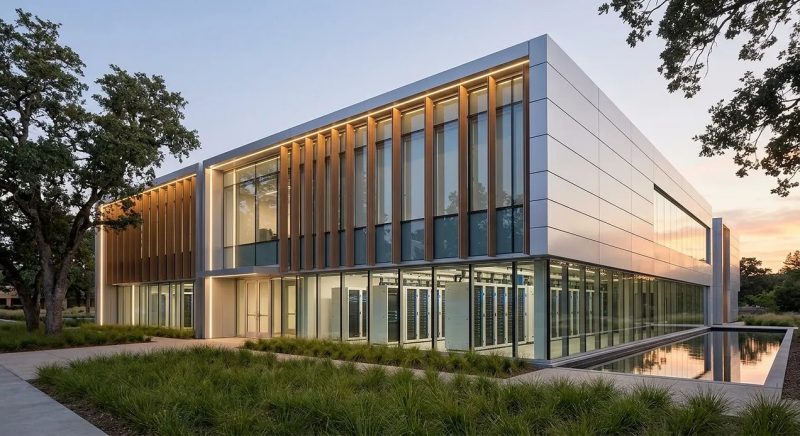
Technology companies are racing to build more data centers to support emerging technologies such as artificial intelligence, assisted driving systems, and robotics. In addition to supporting the economy, they also play a vital role in supporting the increasingly complex technology of military defense systems.
Opposition and Counter Arguments
As data centers are proposed, developers are facing mounting resistance. Some of it is from local residents who voice concerns such as those listed below. However, much of the push-back comes from campaigns funded by national and foreign organizations that feed community fears—claiming that data centers will spike utility bills, drain reservoirs, and generate non-stop noise.
- “I don’t want a data center in my backyard.” Local communities should use zoning ordinances to determine where to build data centers. There are many industries that don’t make sense to build next to residential homes.
- “Data centers are noisy.” Modern data centers are much quieter than older data centers. They generate significantly less ambient noise and traffic than a traditional manufacturing plant or distribution center. Developers frequently acquire large tracts (sometimes thousands of acres) and build on only a fraction of the land. This excess acreage can provide generous visual and acoustic buffers to ensure that ambient noise is virtually undetectable at property lines.
- “Data centers use too much water.” Modern data centers that use closed-loop cooling systems use 1/30 of the water of a typical golf course.
- “Data centers will use too much electricity, and our utility bills will increase.” Modern data centers typically build their own energy plants and feed surplus electricity back to the grid, helping stabilize or even lower local utility rates.
- “Developers are getting tax breaks.” Although local governments often provide incentives for new businesses to locate in the area, in the long term it improves the local tax base. This can lower income tax and property tax rates for residents and provide revenue to fund schools and local infrastructure. In addition, data centers create immediate construction jobs as well as long-term, high-paying technical jobs.
- “More data centers give technology companies too much control. It could also lead to more government surveillance.” Blocking the construction of data centers will not in itself stop overreach by the government or technology companies. They need to be controlled through regulations about how they use data.
Summary
There is a way to address local concerns and still provide this necessary infrastructure. It is prudent to build this critical infrastructure in the United States where we can control it. If we don’t develop it here, it will be built overseas and will give major technological and economic advantages to geopolitical rivals like China.
How Communities Can Shape the Next Generation of Data Centers
To win local support, developers must clearly articulate early in the process how these facilities will serve as low-impact economic engines for the community.
The following is a community guide to negotiating data center projects.
When a developer proposes a data center in your town, the conversation shouldn’t just be about whether to approve or deny the project—it should be about setting the terms. While data centers are generally low-impact neighbors compared to industrial manufacturing or heavy logistics, communities hold immense leverage to ensure these developments actively improve the surrounding area. By replacing passive approval with proactive negotiation, local leaders can secure lasting economic and aesthetic dividends.
Modern data centers offer many benefits to a community when leaders negotiate from a position of strength. Below is a negotiation checklist for local boards and community leaders:
- Water: Insist on closed-loop cooling systems that continuously recirculate water. With this kind of system, data centers consume 1/30th the water used in a typical golf course.
- Power: Require the developer to build self-sustaining power generation or microgrid capacity that feeds surplus electricity back into the local grid, helping stabilize or lower residential utility rates.
- Noise & Setbacks: Leverage the site’s acreage for spatial buffering. Developers frequently acquire large tracts (sometimes thousands of acres), while building on only a fraction of the land. Mandate generous visual and acoustic buffers using this excess acreage. Multi-hundred-yard setbacks, natural greenbelts, earthen berms, and native tree preservation can ensure that ambient machinery noise is virtually undetectable at property lines.
- Architecture: Demand high-end exterior building designs featuring contemporary lines, decorative screening, and quality facade materials rather than plain concrete boxes that disrupt the visual landscape.
- Infrastructure: Require the developer to fully fund and construct all necessary roadway improvements and access points to handle both temporary construction traffic and ongoing operational needs.
- Tax Base: Although local governments often provide incentives for new businesses to locate in the area, consider the long-term impact on the local tax base. Structure host agreements and tax terms so that project revenues directly fund local emergency services, schools, and road maintenance, lowering the long-term tax burden on current residents. Some states are dedicating revenues to reducing and ultimately eliminating state income tax.
- Jobs & Local Commerce: Require commitments for sourcing local construction trades during build-out, while evaluating how permanent, high-paying technical roles fit into the town’s long-term economic plans. Consider the additional economic growth that comes from providing restaurants and other businesses to support the new workforce.
By setting these expectations early in the zoning process, communities can transform potential friction into a collaborative partnership, ensuring that the data center operates as a quiet, attractive, and high-value economic engine for decades to come.
Read related articles about data centers.