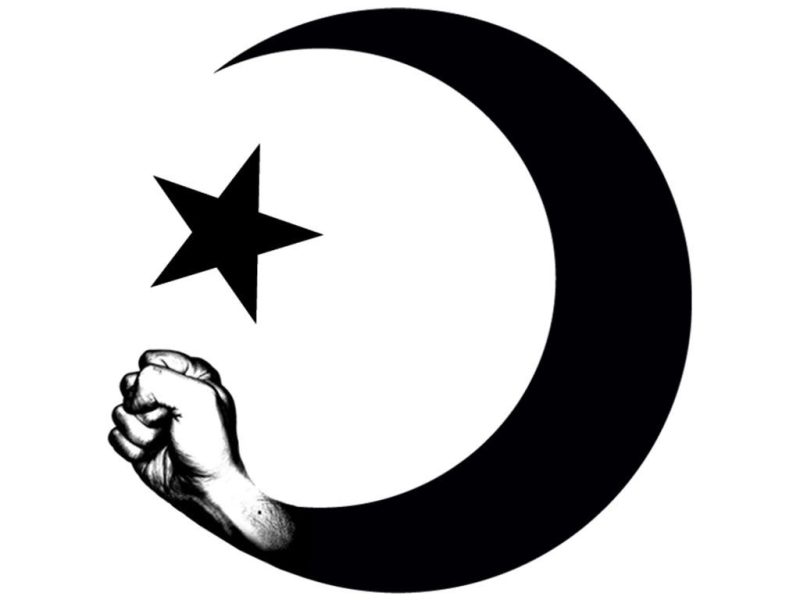
Faith vs. Political Ideology
To understand news about the Middle East and global politics, it is helpful to know the difference between Islam and Islamism:
- Islam is a global religion focused on personal faith, prayer, moral living, and submission to God. Its goal is individual salvation and living a good life. It is practiced by nearly 2 billion Muslims around the world from many different cultures.
- Islamism (also called Political Islam) is a modern political movement. Islamists believe that Islam is not just a personal religion, but a complete legal and political system that should govern laws, courts, and national governments. Islamism emerged predominantly in the 20th century as a response to modern secularism, Western colonialism, and political instability in Muslim-majority regions.
Different Types of Islamism
Islamism covers a wide range of political beliefs. Scholars split the movement into three main groups:
- Mainstream or Democratic Islamism: Groups and political parties that run candidates in democratic elections to pass laws based on Islamic values. Examples include active political parties in countries like Turkey, Indonesia, and Tunisia.
- Revolutionary or Authoritarian Islamism: Movements that take over a country’s government completely through revolution or dictatorship. For example, religious leaders took control of the government of Iran during the 1979 revolution.
- Violent Extremism (Jihadi-Islamism): Radical terrorist groups that reject democracy and use violence, bombings, and warfare to force their strict rules on others. Examples include Al-Qaeda, ISIS, Hamas in Gaza, Hezbollah in Lebanon, and the Houthis in Yemen.
While most Muslims around the world reject violent extremism, these radical groups have caused widespread war, destruction, and terrorism across the globe.
Islamist Tactics
Some radical groups use a strategy they call “civilizational jihad” to try to change non-Muslim countries from within. They focus on several main methods:
- Migration to Other Countries: Moving from Muslim-majority nations into non-Muslim countries in large numbers. Globally, around 80 million Muslims live outside their home countries, making up about 30% of the world’s migrants. About 50 million live in Europe and more than 5 million in the USA.
- Keeping Cultures Separate: Encouraging new immigrants to live in distinct communities and avoid blending into the local culture or adopting local customs.
- Population Growth: Growing their communities through higher birth rates,[1] sometimes with multiple wives.[2] Currently, there are nearly 2 billion Muslims globally. Because this population is growing at roughly twice the world average, experts project it could reach nearly 3 billion by the middle of the century.
- Indoctrination: Working to influence public opinion, particularly among students on college campuses, through teaching, political activism, and protest movements. They believe that Islamic teachings sanction any means necessary, including “holy deceit” and violence.
- Building Political Power: Creating organized voting groups to elect preferred candidates to local and national government offices. Examples include the large Muslim communities in northeastern states. Since 2019, 200 Muslims have been elected to government positions in nearly every state.
- Establishing Islamic Law: Working to establish principles of shari‘a law through courts and local legal systems.
Mass Immigration
On September 11, 2001, foreign terrorists attacked the United States from outside the country. This led to long wars in Afghanistan and Iraq to defeat those extremist groups. Today, national security experts warn that some radical groups try to enter American society to cause harm from within.
More than 5 million Muslims live in the United States. The vast majority are peaceful citizens, but a small minority hold radical views.
During the “open border” years of 2021–2024, many known and suspected terrorists entered the country. The following numbers are from the Terrorist Screening Dataset, [3] commonly referred to as the terrorist watchlist:
- Intercepted at Borders: Border Patrol agents apprehended nearly 400 terrorists on the watchlist trying to enter between official ports of entry, while over 1,700 were turned away.
- Vetting Failures: About 100 on the terrorist watchlist were released into the country.
- Unscreened Crossings: Security officials estimate that roughly 2 million people entered the country without being processed by border agents. It is unknown how many terrorists may have been in this group.
Shari‘a Law and Human Rights
Shari‘a refers to the body of religious rules and moral guidance derived from the Qur’an and the teachings of Muhammad. While everyday shari’a guides personal practices like prayer, fasting, and modest clothing, radical Islamist regimes use harsh interpretations as state law.
In nations ruled by extremist groups or strict authoritarian regimes, these laws conflict directly with democratic freedoms guaranteed by the U.S. Constitution:
- Freedom of Speech and Religion: Strict shari’a states prohibit leaving Islam (apostasy) or criticizing the religion (blasphemy), often making them crimes punishable by death.
- Severe Physical Punishments: Classical legal rules in extremist areas prescribe severe physical penalties, such as amputation of hands or feet for theft, public stoning for adultery, or execution for homosexuality.
- Equal Rights: Strict legal codes often limit the legal rights, education, and freedoms of women, and treat non-Muslims as lower-class citizens without equal protection under the law.
Muslim Brotherhood
Founded in Egypt in 1928, the Muslim Brotherhood is the oldest modern political Islamist movement. Its famous slogan is “Islam is the solution.” It seeks to restructure government and society around shari’a law.
Political Influence: The movement operates as a network of political groups, charities, and social organizations throughout the Middle East and in several Western countries.
Connections to Radical Groups: While the Brotherhood officially presents itself as a political movement, its radical ideas helped inspire violent splinter groups. For example, Hamas was formed as the Palestinian branch of the Muslim Brotherhood. Its radical ideology has influenced may other militant groups, such as the Houthi forces in Yemen, Hezbollah in Lebanon, Al-Qaeda, the Taliban, and ISIS.
Government Designations: Several nations classify the Muslim Brotherhood as a terrorist organization.
Political Tactics: In a document titled, “The Explanatory Memorandum of the Muslim Brotherhood Strategy in North America,” leaders of the group outlined a strategy to secretly influence American politics and change society from the inside. To gain political power, some Islamist activists work alongside far-left political groups, such as the Democratic Socialists of America (DSA). This partnership is called the Red and Green Alliance because it brings together socialist political ideas (red) and radical religious movements (green). These groups work together because they share a strong opposition to capitalism, Western government systems, and current U.S. foreign policies, especially regarding Israel. They want to replace the U.S. Constitution. Some political candidates and elected local officials across the United States have received support from or have personal ties to organizations linked to the Muslim Brotherhood network. They are especially active on college campuses, organizing protests and riots.
Footnotes
[1] Globally, Muslim families tend to have more children on average compared to non-Muslim families. In the United States, Muslim families have slightly higher birth rates than the national average, largely because the U.S. Muslim population is younger and more likely to be married during childbearing years, and more likely to have children than Americans who identify with no religion.
[2] Traditional Islamic law permits a man to have up to four wives, but only if he can treat and support them all equally. Having multiple wives is allowed, but it is not required. Plural marriage is illegal in most Western countries and is uncommon in modern societies.
[3] The Terrorist Screening Dataset (commonly called the terrorist watchlist) is a database run by federal intelligence agencies. It includes known or suspected terrorists, as well as their close r associates, family members, and individuals linked to foreign militant networks. Being on this list does not automatically mean a person is planning an attack, but it alerts law enforcement that the individual could pose a potential security risk